
What If You’re Doing Better Than You Think? The Truth Every Homeschool Mom Needs to Read
Stephie Bermudez M
1/1/20264 min read

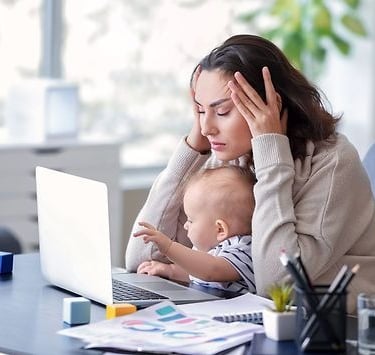
There are nights when, once the noise of the day finally fades and the children are asleep, I find myself wondering if it was enough. If I did the right thing. If today they learned “what they were supposed to learn.” And I know that if you’re reading this, you’ve probably had those thoughts too.
I’ve doubted myself as well. Many times. I’ve felt that quiet pressure that isn’t always spoken out loud, but still weighs heavy. That feeling of giving everything you have… and still wondering if it’s enough. Being a homeschool mom is beautiful, yes—but it’s also deeply demanding. No one really prepares you for the emotional load that comes with educating your children at home.
That’s why today I want to speak to you not from theory, but from the place of a mom who has also felt guilt, fear, and insecurity. And to tell you something that took me a long time to understand: maybe you’re doing better than you think.
The guilt no one sees, but so many of us feel.
Guilt in homeschooling isn’t always loud. Sometimes it’s quiet, constant, slipping into the smallest thoughts. It shows up when you compare yourself, when you doubt, when you feel like another mom is doing it better than you. For a long time, I thought that guilt meant there was something wrong with me.
With time, I realized that wasn’t true. The guilt appeared because I made a different choice. Because I stepped off the familiar path. Because when you homeschool, there isn’t a system constantly validating you—and that forces you to evaluate yourself all the time.
Many times, we don’t feel guilty for what we’re doing, but for what we believe we should be doing. For that ideal version of “perfect homeschooling” that lives in our minds but rarely holds up in real life.
Accepting that guilt is part of the process was the first step toward stopping the fight with myself. Not to stay there, but to understand it—and slowly learn to let it go.
YOU MIGHT ALSO BE INTERESTED IN: this planner for tired moms, tailored to your needs and easy to download. CLICK HERE.
Days that don’t look productive… but are.
There were days when I ended with the feeling that we had wasted time. No finished activities. No clear results. No sense of “today we really moved forward.” Days when I thought, this can’t be enough.
But when I stopped looking only at academics, I began to see other things. I saw deep conversations that arose without planning. I saw unexpected questions. I saw emotions that needed more attention than any workbook.
I learned that not every day is meant to produce—some days are meant to hold space. And holding space also educates. It educates when you listen, when you walk alongside them, when you validate emotions, when you choose connection over content.
Those days, even if it doesn’t seem like it, build an emotional foundation that makes all future learning possible.
Progress you can’t measure, but that stays.
For a long time, I thought progress had to be fast. That if there was no clear evidence, something was going wrong. Today I know that idea comes from a model that doesn’t always fit the reality of homeschooling.
There is progress that takes time to show itself—but when it does, you realize it’s been forming for a while. A child who now trusts themselves more. Another who dares to make mistakes. One who is no longer afraid to learn.
I learned to notice those small changes, to celebrate them quietly, to understand that even if they can’t always be measured, they are deeply meaningful.
True progress isn’t always obvious, but it leaves marks that stay with your children for life.
You are not a school, you are a mom.
This was one of the most freeing truths for me. Letting go of the expectation that I had to function like a complete educational system. I’m not. I’m a mom—with good days and tired days—doing the best I can to walk alongside my children.
Homeschooling doesn’t need perfection; it needs humanity. It needs flexibility, listening, the ability to adjust when something isn’t working. It needs you to be well, too.
When I understood that I didn’t have to do everything, that I could ask for help, that I could rest, homeschooling stopped feeling so heavy. It started to feel possible.
Educating at home doesn’t mean doing it perfectly—it means doing it consciously.
Maybe you don’t need to change so much—maybe you just need to trust more. If you’ve made it this far, I want you to know something: you’re not alone. Many of us have felt the same way. And many of us are still learning to trust our process.
Maybe you don’t need to change how you educate. Maybe you need to change how you speak to yourself when things don’t go as planned. To look at yourself with more compassion, more patience, more love.
Because if you’re here—questioning, reflecting, trying to do better—you’re already doing so much more than you think.
If this text resonated with you, I want to invite you to take one more step.
If this spoke to your heart but you’re still thinking “I need help organizing all this”, I gently invite you to check out the Simple planner pack for tired moms. 🤍 CHECK OUT IT HERE.
It’s not about perfection—it’s about real life, clarity, and breathing again.
Sometimes the first step isn’t learning more… it’s simplifying.